
Where are the labour market’s biggest blind spots? Why employers and jobseekers keep missing each other?
Both sides are looking for the other, yet they rarely connect. In our HR Subjective column, Petra Benke, Country Manager of Orienta Hungary replies to the question: how well does what a company thinks of itself match what candidates see from the outside, and vice versa? Where are today’s biggest blind spots in the thinking of employers and candidates?
It is a workday morning. An HR manager sets her coffee down, pushes the tenth CV aside and sighs: once again, nobody who is really right for the role. At the same hour, on the other side of town, someone refreshes their inbox. They applied for a job two weeks ago and have heard nothing since, even though everything seemed to fit.
Two people who are, in theory, looking for each other end the day with the same thought: the other side is to blame. Companies say candidates ask for too much. Candidates say companies expect the moon. The most interesting part is that each has a point.
At Orienta Hungary, we sit on both sides of the table every day. From there it is clear that the problem is often not the number of candidates or the level of salaries. It is how well the two sides understand each other, or fail to.
The perfect candidate who doesn’t exist
Most companies know exactly who they are looking for. They know the tasks, the results they expect, and they have a fairly firm picture of the ideal person. Then that picture slowly turns into a shopping list: five years of experience, three languages, two specialist software tools, a track record in management and, of course, immediate availability.
Every item on the list is marked “requirement”. Yet if you go through it honestly, half of it turns out to be “nice to have”. Some skills are genuinely needed from day one. Others can be picked up by anyone with proper onboarding, a patient colleague or a few months of practice.
If the two get blurred together, the company screens out exactly the people who could become the team’s best performers within six months.
It’s not only about the money
The other employer-side myth is that everything comes down to salary. Pay matters, of course, and without it many people won’t even consider an offer. But ask someone why they stayed in one place for years, or why they left after six months, and salary is rarely the first answer.
You hear things like: “I had a great boss.” “I knew what to expect.” “I could grow.” “I got home while it was still light.” A good salary can get someone through the door. Keeping them takes something else.
That is why selection should not stop at asking whether a candidate is suitable. It is worth finding out what matters to them, and being honest about whether the company can actually deliver it.
The candidate’s side: an offer is more than a number
Candidates have their own ingrained habits. One of the most common is reading only a single line of a job ad with real care: the one with the salary. Everything else, including the content of the work, the team, the opportunity to grow and where someone might be in two or three years, fades into the background.
That doesn’t mean salary expectations are excessive, or that candidates should lower them. It simply helps to know what you are really looking for. Someone who needs more money right now will decide differently from someone who wants security or a big professional step forward. All three goals are entirely legitimate, but they are not served by the same job.
What is experience worth if you can’t tell the story?
There is another trap many strong professionals fall into: they feel their experience speaks for itself. Ten years in the field, this many projects, what more could anyone want?
But employers are not persuaded by years. They are persuaded by stories. What was the situation only you could solve? What did you do differently from your predecessor? What result did you leave behind? Someone who can answer with specific, vivid examples is more than just another CV in the pile.
Preparation and communication are therefore not mere courtesies. They show the company how a candidate thinks and how well they would fit the team.
Flexible? Stable? Depends who you ask
This brings us to perhaps the most insidious blind spot: when both sides use the same word but mean something entirely different by it.
“Flexible working.” In the company’s mind, it means you can arrive any time between eight and nine. In the candidate’s mind, it means organising their own day and, if needed, working from home in the afternoon.
“Stable workplace.” For the company, it means a thirty-year track record. For the candidate, it means not getting a new boss and a new role every month.
“Competitive salary”, “development opportunities”, “family atmosphere”: behind each lies at least two readings. Most of the time there is no real conflict of interest, just nobody asking what the other side meant. The disappointment then tends to arrive at the worst possible moment: at the final interview, or during the probation period.
That is why straight talk, fast and substantive feedback, and a willingness on both sides to ask questions matter so much. The company should say what it offers and what it expects. The candidate should say what they won’t compromise on.
An interpreter between the two sides
Sometimes the two parties simply don’t speak the same language. That is when it helps to have someone who understands both.
A good recruitment partner helps the company decide which items at the top of its list are truly essential, and gives a realistic picture of the candidates it can expect. For candidates, it helps them articulate what they are looking for and say, in good time, whatever would cause problems later. That way misunderstandings come to light before anyone is disappointed.
In the end, two people decide
Perhaps the labour market’s biggest blind spot is this: we assume the other side cares about the same things we do. They rarely do.
If we accept that, recruitment is no longer about filling an empty seat. It is two parties sitting down together and deciding whether they will do well together in the long run.
Good hiring is not a process where every requirement gets a tick. It is one where, a year later, both sides can say: we made the right call.

HR Hungary in English
HR content in English from Hungary's leading HR portal. Read the most important HR news and interviews with HR professionals, on pressing issues of the labour market, key industry trends, and more.

Hol vannak a munkaerőpiac legnagyobb vakfoltjai? Miért nem találják egymást a cégek és az álláskeresők?
Mennyire találkozik az, amit egy cég magáról gondol, azzal, amit a jelöltek kívülről érzékelnek? És fordítva? A piac mindkét oldalára rálátva, hol vannak ma a legnagyobb vakfoltok a munkáltatók és a jelöltek gondolkodásában? - teszi fel a kérdést HR Szubjektív rovatunkban...
- 2026.11.19Dr. Berke Gyula - Nehéz munkavállalói helyzetek - figyelmeztetéstől a munkaviszony megszüntetéséig Hogyan kezelhetők jogszerűen a nehéz munkavállalói helyzetek, a teljesítményproblémáktól a kötelezettségszegésig? Előadásunk bemutatja a figyelmeztetés, a felmondás és a munkaviszony megszüntetésének legfontosabb szabályait, valamint a megfelelő dokumentáció szerepét.
 Részletek
 Jegyek
- 2026.11.24A megtartás kulcsa 2026 – Vezetői konferencia Mitől lesz egy munkahely valóban megtartó? 6700 fős országos kutatás, vezetői kerekasztalok és jó gyakorlatok. Hallgasd meg azokat a vezetőket, akik a megtartást a gyakorlatban is sikeresen megvalósítják! Részletek Jegyek
- 2026.12.03Dr. Sipka Péter - Mesterséges intelligencia a munkavégzésben - lehetőségek, korlátok és felelősség Hogyan használható biztonságosan és jogszerűen a mesterséges intelligencia a munkahelyen, különösen a HR-területen? Előadásunk bemutatja az AI-használat jogi és adatvédelmi korlátait, a felelősségi kérdéseket és a belső szabályozás legfontosabb szempontjait. Részletek Jegyek
- 2026.12.09Dr. Kollár Gergő - Munkáltatói ellenőrzés és adatvédelem - e-mail, kamera, home office Meddig terjedhet a munkáltatói ellenőrzés, és hogyan védhető a munkavállalók magánszférája? Előadásunkon bemutatjuk az ellenőrzés legfontosabb jogi és adatvédelmi szabályait, gyakorlati példákkal. Részletek Jegyek
Heti ajánló
- Mérlegképes könyvelő képzés: 2026-ban a PENTA UNIÓ lett Az Év Felnőttképzője kategóriagyőztese TIPP
- A diákmunkások lehetnek a karácsonyi szezon szuper hősei TIPP
- Nem elég a jó fizetés és a babzsák: így lehet boldoggá tenni a munkavállalókat TIPP
- Nem csak a fizetés számít: ezek a munkahelyek egészen mást is kínálnak a dolgozóknak TIPP
Állások
- Minőségbiztosítási munkatárs/Minőségellenőr
- Kőműves, homlokzati hőszigetelő
- Dolgozz szállodai programszervezőként napsütötte nyaralóhelyeken
- Bútorasztalos/Konyhaszerelés
- Festő / Homokfúvó (2026. 11. 04)
- Pénzügyi És Irodai Asszisztens - Budapest (2026. 11. 12)
- Lakatos (2026. 11. 12)
- Junior Business Analyst gyakornok (2026. 11. 13)
- Master Data Management gyakornok olasz nyelvtudással (2026. 11. 13)
- QC gyakornok (2026. 11. 13)
Partnereink hírei

- Novemberben is meg lehet metszeni a levendulát?
- A 4 legszebb karácsonyi szobanövény
- Konyhakert novemberben: itt a feladatlista!

HR Blog oldalak
-
JobAngel
A hatékony munka – hogyan szerezzük vissza a kontrollt az időnk és a figyelmünk felett?
A hatékonyságtámogató eszközök használatának egyik abszurd tanulsága, hogy nem feltétlenül az embereket lehet...
-
Hurrá, állást keresek...
10+1 tipp, ha szeretnéd elüldözni a legjobb embereid a cégtől
Adott egy kis magyar cég, ahol hatalmas a fluktuáció, és ennek az elsődleges oka maga a vezető. Tanulságos cikk, talán neked is segít.
-
Scotwork
Erőviszonyok tudatosítása
Amikor egy kisebb vállalkozás egy nagyobb céggel ül le tárgyalni, gyakran látjuk, hogy a kisebb cég tárgyalócsapatát a...

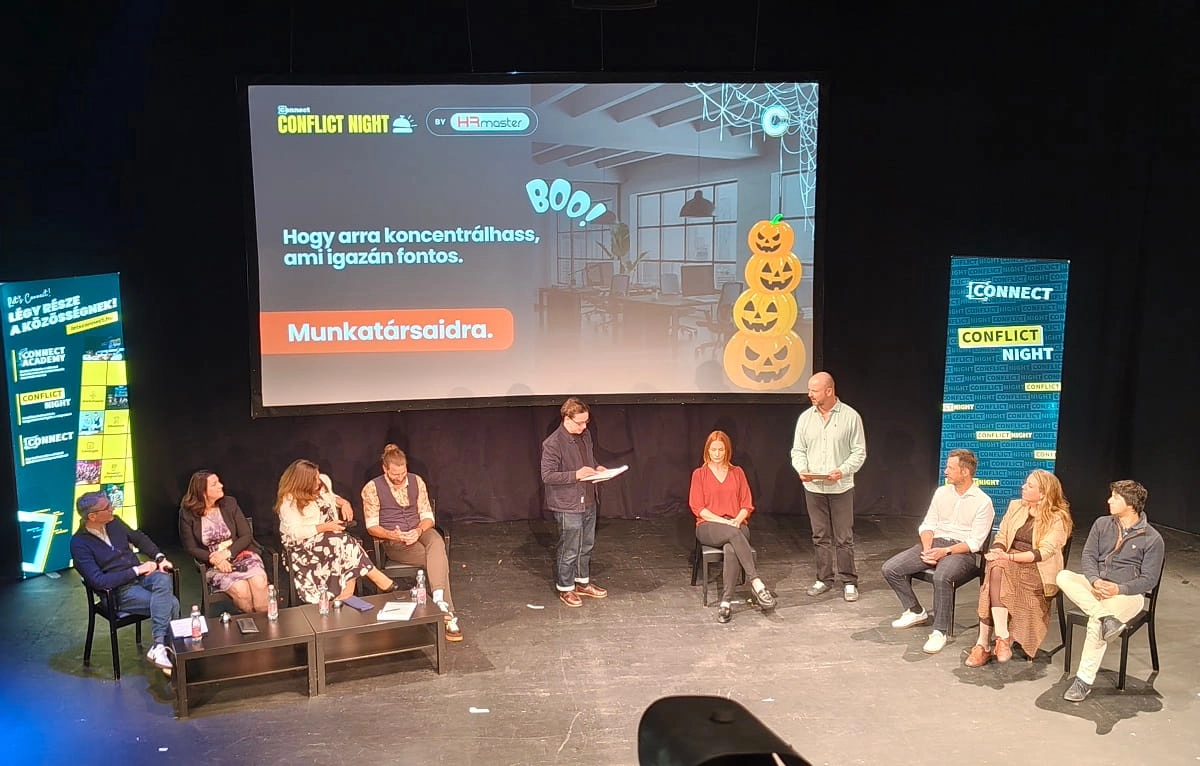 Conflict Night: rémálom HR-helyzetek a színpadon